Brewing the Self-Writing Internet: My Experience at Caffeine AI’s Pre-Launch Hackathon
Oct 2, 2025
5 min read
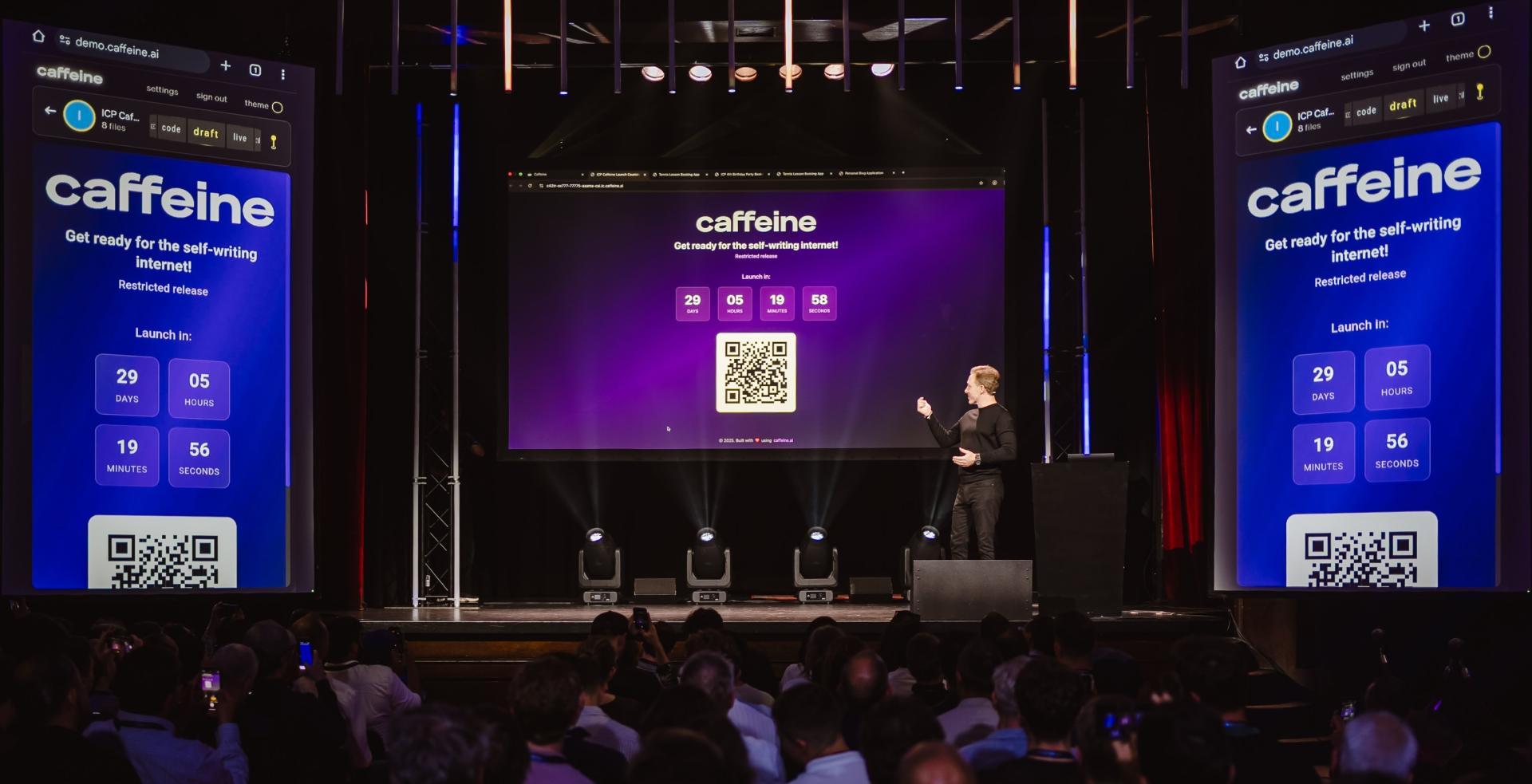
When I entered Dogpatch Studios in San Francisco for the “Hello, Self-Writing Internet / Caffeine Hackathon & Launch”, there was only one question circling in my head — could this really be the beginning of something that shifts the way we build apps? I wasn’t looking for noise or hype. I wanted to see if it worked. And now, with early access in my hands and a weekend of tinkering behind me, I know this isn’t just another demo dressed up as the future. Something is quietly brewing here.
Setting the Stage: What Caffeine Wants to Be
Caffeine calls itself a “self-writing apps platform.” You tell it what you want in plain words, and it creates the app stack, logic, hosting, everything. No DevOps, no endless setup. The difference? These apps don’t live on rented servers in the cloud. They live on-chain, powered by the Internet Computer Protocol, meaning they’re persistent, scalable, and not tied to one company’s infrastructure.
It isn’t just about code generation. The promise is bigger anyone, even those who have never written a line of code, should be able to describe what they imagine and see it live within minutes. That vision alone is enough to stir curiosity. But the real test came at the event.
Walking Into the Hackathon
The space felt alive the moment I walked in. Bright screens, scattered pods, groups huddled with laptops open. The structure was clear: talks on stage, demo stations buzzing, and a hackathon where both coders and creators were challenged to push Caffeine to its limits.
I found myself among 80 or so creators, some skeptical, some impatiently excited. When the first live demo showed a working blog spun out of a single sentence, there were gasps. It wasn’t perfect a few rough edges, some clunky UI but it worked. And that mattered more than polish.
I watched as a tennis-coach CRM came to life. A prompt describing schedules, bookings, client data. Minutes later, a functioning app stood in front of us, live, connected, hosted. It didn’t feel like smoke and mirrors. It felt like a glimpse of where we’re heading.
My Hackathon Build
I wasn’t there to watch. I wanted to try. I chose the non-technical track and started with a small idea a micro-story app where users could submit two-line prompts. Something simple, but not static.
I told Caffeine what I wanted. A scaffold appeared. I asked for login, it gave me login. I asked for sorting, pagination, and pastel-colored cards. It responded, sometimes instantly, sometimes with quirks that needed a second try. But every step felt like nudging clay words shaping code.
Within four hours, my idea was to live on a URL I could share. No hosting fees, no deployment pipeline, no midnight bug fixing. Just prompts. Around me, others were building marketplaces, forums, and small games. None of us had spent more than half a day.
The Rough Edges
Magic doesn’t mean flawless. Ambiguous prompts broke the flow. UI design flexibility was limited. Complex external integrations felt out of reach. Debugging deeper issues was like peering through tinted glass. Yet, for an alpha, the tradeoff made sense. What it gave speed and simplicity outweighed what it lacked.
Why This Feels Different
Other tools let you code in the cloud. Some even assist with AI suggestions. But they’re still editors at the core, expecting you to stitch things together. Caffeine flips the approach. You don’t open an editor. You open a conversation.
It isn’t just about speed. It’s about ownership. Apps built here live on-chain, tamper-resistant, persistent. You don’t worry about downtime when updating. And the “App Market” concept clone, adapt, remix feels closer to a culture of creation than consumption.
This is where it could become lovable. Not because it has more features than Replit or Glitch, but because it feels like it listens to you. Because it lowers the barrier enough for creators who never thought they could build an app to suddenly believe they can.
What I’m Watching
The future of Caffeine will depend on a few things: whether people keep returning to build, whether integrations with real-world services get smoother, whether debugging tools catch up with the magic, and whether performance holds when more apps go live. If the team can close these gaps while keeping the simplicity intact, it won’t matter if it shouts louder than competitors. Word of mouth will do its work.
Closing Thoughts
When I walked out of Dogpatch Studios that evening, I didn’t feel like I had just attended another launch event. I felt like I had touched a small corner of the internet that writes itself. It isn’t polished yet. It isn’t finished. But it’s alive.
Caffeine doesn’t need to announce itself as a rival to anyone. It just needs to keep delighting the ones who use it. Because once you’ve seen an app spin out of your own words and go live in minutes, it’s hard to go back.